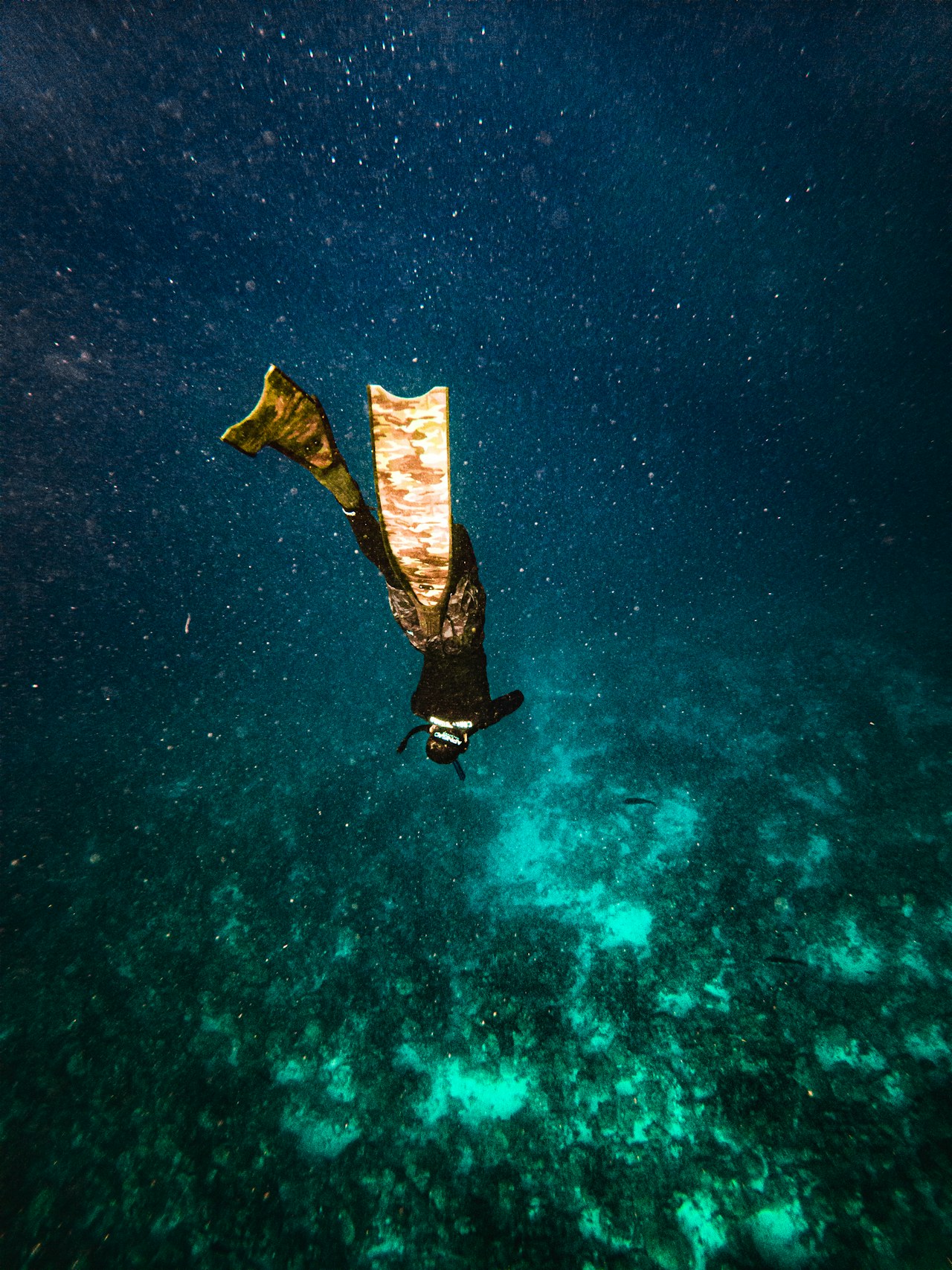
When observing elite freedivers descend to depths exceeding 100 meters on a single breath, it is easy to assume they possess superhuman lungs. However, the true secret to extreme apnea performance is not found solely in the respiratory system, but in the cardiovascular and hematological adaptations that occur deep within the body.
While much attention is given to the Mammalian Dive Reflex—characterized by bradycardia (lowered heart rate) and peripheral vasoconstriction (blood shifting to the core)—there is a secondary, often overlooked mechanism that drastically alters a diver's physiology during a session. This mechanism is the acute contraction of the human spleen.
Under specific apneic stressors, the spleen acts as an internal biological scuba tank. Rather than storing air, it stores highly concentrated, oxygen-rich red blood cells. By contracting and releasing these cells into the central circulation, the body artificially boosts its oxygen-carrying capacity in real-time.
Here is the objective, science-backed breakdown of the hematological adaptations in apnea, the exact triggers of splenic contraction, and how this phenomenon temporarily rewires human physiology for the deep.
The Anatomy and Primary Function of the Human Spleen
To understand the "Spleen Effect," it is necessary to examine the baseline function of the organ. Located in the upper left quadrant of the abdomen, just beneath the rib cage and behind the stomach, the spleen is a fist-sized organ primarily associated with the immune system and the filtering of blood.
In everyday terrestrial life, the spleen performs several critical physiological roles:
- Erythrocyte Clearance: It identifies and removes old, damaged, or misshapen red blood cells (erythrocytes) from the bloodstream.
- Immune Response: It produces and stores white blood cells (lymphocytes) which act as the body's defense against infections and pathogens.
- Blood Reservoir: Most importantly for freedivers, the red pulp of the spleen acts as a dense sponge, holding a significant reserve of red blood cells.
In a resting human, the spleen holds approximately 200 to 300 milliliters of blood. However, this stored blood is not identical to the blood flowing through the rest of the circulatory system. The blood sequestered in the spleen has a significantly higher hematocrit (the volume percentage of red blood cells). While normal circulating blood has a hematocrit of roughly 40% to 45%, the blood stored within the spleen can have a hematocrit level exceeding 80%. It is essentially a reservoir of pure, oxygen-binding hemoglobin.
The Trigger Mechanisms: Hypoxia and Sympathetic Activation
The spleen does not release this highly concentrated blood randomly. The contraction is an acute evolutionary defense mechanism triggered by specific environmental and physiological stressors. In the context of freediving, splenic contraction is initiated by a complex interplay of chemoreceptor activation and the sympathetic nervous system.
1. The Role of Hypoxia and Hypercapnia
During a breath-hold, the body consumes oxygen (creating a state of hypoxia) and accumulates carbon dioxide (creating a state of hypercapnia). Central and peripheral chemoreceptors—located in the medulla oblongata, the carotid bodies, and the aortic arch—constantly monitor the partial pressures of these gases in the arterial blood.
When these receptors detect significant hypoxic stress (a severe drop in oxygen) combined with hypercapnia, they signal the brain that the body is entering a critical state of oxygen deprivation.
2. Sympathetic Nervous System Output
Upon receiving these distress signals, the brain activates the sympathetic nervous system (the body's fight-or-flight network). This sympathetic activation sends efferent signals directly to the smooth muscle fibers located within the capsule and trabeculae of the spleen.
These smooth muscles forcefully contract, physically squeezing the organ like a sponge. This mechanical compression rapidly ejects the sequestered, high-hematocrit blood out of the spleen, through the splenic vein, and directly into the systemic circulation.
3. The Amplification of Facial Immersion
While holding one's breath in a dry environment will eventually trigger a mild splenic contraction, the effect is dramatically amplified by the physical act of diving. The trigeminal nerve, a highly sensitive cranial nerve that branches across the human face, detects the sudden drop in temperature when the face is submerged in cold water. This facial immersion acts as a primary catalyst for the Mammalian Dive Reflex, intensifying the sympathetic output to the spleen and resulting in a much more forceful and complete contraction.
The Timeline of the "Spleen Effect" During a Dive Session
Splenic contraction is not instantaneous. A diver does not immediately benefit from a boosted red blood cell count the second their face touches the water. The physiological adaptation requires a period of "warm-up" apneas to fully engage.
Clinical studies utilizing ultrasonic imaging of the spleen during apnea have mapped the precise timeline of this phenomenon:
The Onset: The spleen begins to contract after the first 2 to 3 consecutive breath-holds. The required holds must be deep enough to trigger mild hypoxia; shallow, comfortable breath-holds will not elicit a strong sympathetic response.
The Peak Contraction: Maximum splenic contraction typically occurs after 15 to 20 minutes of repeated apneic stress. At this peak, ultrasound imaging reveals that the spleen's physical volume can decrease by 20% to 50%, depending on the individual's genetic predisposition and level of apnea training.
The Hematological Shift: At the point of maximum contraction, the release of erythrocytes can increase the diver's circulating hematocrit by 3% to 5%, and increase circulating hemoglobin concentrations by up to 10%.
The Washout Period: The spleen does not immediately refill when the diver stops holding their breath. Once the dive session ends and normal respiration resumes, the spleen slowly reabsorbs the red blood cells. Complete recovery to baseline splenic volume takes approximately 10 to 15 minutes of uninterrupted, normal breathing.
This timeline explains a common phenomenon experienced by spearfishers and competitive freedivers: the first few dives of a session often feel incredibly difficult, accompanied by early diaphragm contractions and a heavy chest. However, roughly 20 minutes into the session, the dives suddenly feel significantly easier and bottom times naturally extend. This is the exact moment the spleen has fully contracted, flooding the system with fresh oxygen-carrying capacity.
The Performance Benefits of Elevated Hematocrit
The acute release of red blood cells provides immediate, measurable advantages for an apneist. By artificially increasing the volume of hemoglobin in the bloodstream, the diver experiences three major physiological benefits:
1. Increased Oxygen Storage Capacity
Hemoglobin is the protein molecule inside red blood cells that binds to oxygen in the lungs and carries it to the tissues. By increasing the total amount of circulating hemoglobin by up to 10%, the body can physically store more oxygen during the final peak inhalation (the breathe-up) before the dive. More stored oxygen directly translates to a delayed onset of severe hypoxia.
2. Enhanced CO2 Buffering
Hemoglobin does not solely transport oxygen; it also plays a critical role in managing carbon dioxide. Deoxygenated hemoglobin acts as a powerful buffer against the hydrogen ions produced by accumulating CO2. By introducing more red blood cells into the circulation, the spleen effectively increases the blood's overall buffering capacity. This delays the onset of respiratory acidosis, allowing the diver to tolerate higher levels of CO2 before the central chemoreceptors trigger involuntary diaphragm contractions.
3. Delayed Lactic Acid Accumulation
During a dynamic apnea (swimming underwater), the muscles eventually deplete their local oxygen stores and shift to anaerobic metabolism. This shift produces lactic acid, leading to muscle fatigue and a heavy, burning sensation in the legs. The influx of fresh red blood cells from the spleen delivers more oxygen to the working muscles, prolonging the aerobic phase and delaying the accumulation of performance-ruining lactic acid.
Training the Spleen on Dry Land
While the spleen contracts most forcefully when the face is immersed in cold water, it is entirely possible to train and trigger this hematological adaptation on dry land. Consistent exposure to hypoxic stress conditions the smooth muscles of the spleen, potentially increasing the total volume of red blood cells it can sequester and release over time.
Triggering the spleen without water requires structured hypoxic exposure, typically through O2 (Oxygen Deprivation) tables. Unlike CO2 tables, which are designed to build tolerance to carbon dioxide through short rest periods, O2 tables are designed to safely expose the body to low oxygen levels by systematically lengthening the breath-hold duration until the diver approaches their maximum capacity.
To properly stimulate a splenic contraction during dry training, the final holds of an O2 table must safely push into the hypoxic zone.
Applying the Framework with Aegean Breath
Managing the structure of O2 tables requires focus, and manually tracking breath-hold times can induce visual stress that elevates the heart rate. Aegean Breath provides a guided, screen-free framework for running these critical hypoxic tables.
By utilizing the app's auto-generating O2 tables, divers can ensure they are following a structured progression designed to apply the necessary hypoxic stress to trigger adaptations like splenic contraction. Furthermore, by using Aegean Breath's audio and haptic guides, divers can remain in a state of deep parasympathetic relaxation, keeping their eyes closed and focusing entirely on their body's physiological shifts.
Understanding the mechanics of your own blood is a critical step in mastering the depths. By incorporating structured O2 tables into your dry training, you can harness the body's natural hematological defenses and ensure your spleen is conditioned to support you when you finally hit the water.
Train your spleen. Extend your bottom time.
Download Aegean Breath on Google PlayUse the auto-generated O2 tables to condition your spleen and unlock your hematological edge.
References & Further Reading
Schagatay, E., Andersson, J. P., Hallén, M., & Pålsson, B. (2001). Selected contribution: role of spleen emptying in prolonging apneas in humans. Journal of Applied Physiology, 90(4), 1623–1629.
Baković, D., Valic, Z., Etrović, D., Vuković, I., Obad, A., Marinović-Terzić, I., & Dujić, Z. (2003). Spleen volume and blood flow response to repeated breath-hold apneas. Journal of Applied Physiology, 95(4), 1460–1466.
Hurford, W. E., Hong, S. K., Standley, P. R., Salzano, J. V., & Lundgren, C. E. (1990). Splenic contraction during breath-hold diving in the Korean ama. Journal of Applied Physiology, 69(3), 932–936.
Guyton, A.C., & Hall, J.E. (2006). Textbook of Medical Physiology. Elsevier Saunders.